On a quiet weekday morning in La Ciotat, the kind of morning when the air still smells of coffee and diesel, a white giant slides silently into the dry dock. Dock workers stop for a second, hands on hips, watching the bow of the yacht loom over the harbor like a floating condo. Someone mutters a name under his breath: Mark Zuckerberg. The rumor has been turning around the port for days. Now the proof is right there, gleaming, almost obscene against the rusted hulls beside it.
The price tag of this toy? Around 300 million dollars. The carbon footprint? Colossal. And suddenly, a simple French port becomes the backstage of a global paradox.
On the French Riviera, an ultra-luxury guest arrives by sea
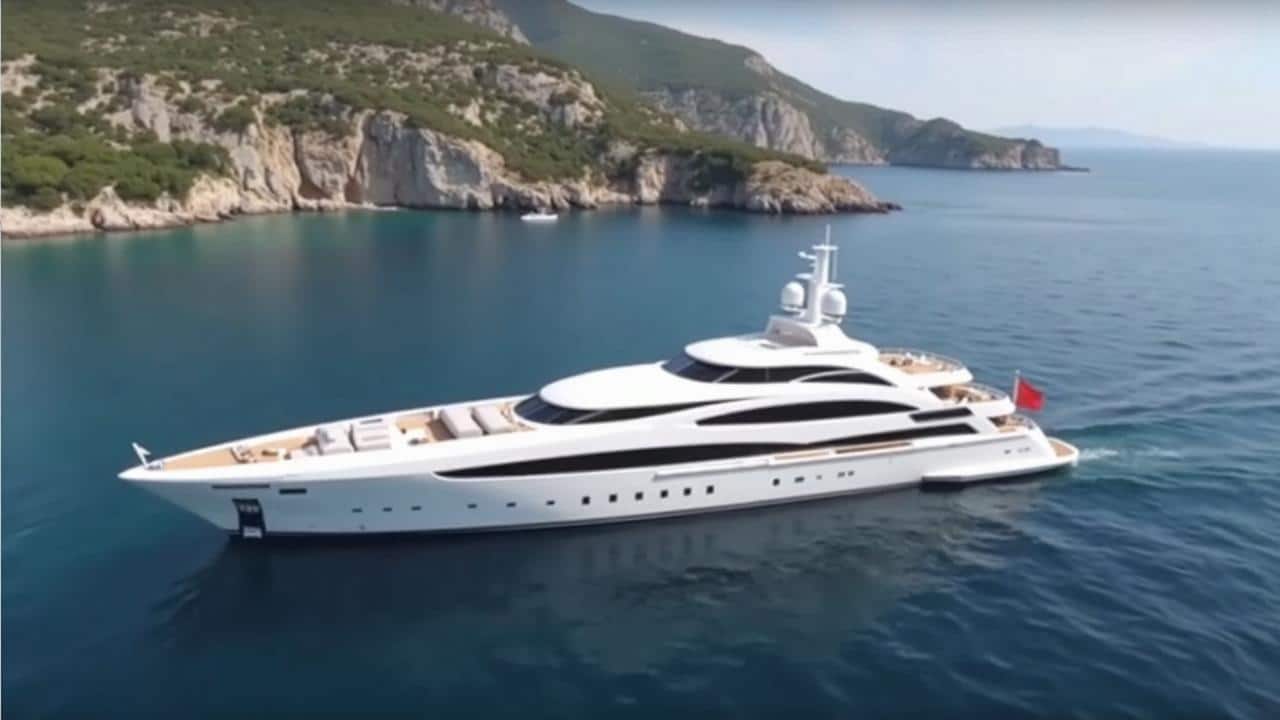
You don’t need a press release to notice when a billionaire’s yacht arrives. You see it in the faces of the guys in overalls, in the extra security cameras hastily turned toward the docks, in the convoys of black vans slipping through the narrow streets of La Ciotat, east of Marseille. The vessel linked to Zuckerberg, the massive yacht “Launchpad”, reportedly around 118 meters long, has been the talk of the cafés for weeks.
From the upper decks, you can imagine infinity pools, helicopter pad, a gym bigger than most city apartments. Down below, the engineers prepare for a different kind of luxury: a full technical refit of an ultra-polluting sea monster. All this happening just a few hundred meters from modest fishing boats and old pointus bobbing on the swell.
Ask around in the port and everyone has their own version of the same story. A crane operator who’s been here for twenty years. A young welder hired on a temporary contract. A café owner who has suddenly started serving iced matcha alongside pastis. They all say the same thing: when a mega-yacht like this comes in, the whole ecosystem shifts. There’s overtime. There are subcontractors called in from all over the region. There are hotel rooms booked at crazy rates.
The numbers behind these ships make your head spin. A yacht this size can easily burn hundreds of liters of fuel per hour. Every crossing is a tiny ecological catastrophe. Yet, for the port and the region, it’s also a windfall. Millions of euros in refit work, high-skilled jobs, prestige contracts that attract other billionaires. The French Riviera has become a luxury garage for the world’s richest.
Here’s the contradiction that sticks in your throat. France loves to present itself as a champion of climate action. Laws, speeches, summits, targets for 2030. Yet the same country quietly rolls out the red carpet to welcome one of Silicon Valley’s biggest fortunes and his floating palace, ready to pamper it with state-of-the-art facilities. La Ciotat Shipyards has specialized in superyachts for years, and that strategy pays off.
On paper, the story is simple: France sells technical excellence, highly qualified labor, tax revenue. Underneath the glossy brochure, another truth lurks. These vessels symbolize a form of excess that collides head-on with the climate reality we’re all living, from droughts in Provence to fires in the Massif des Maures. The Riviera now hosts both climate refugees… and $300 million playgrounds.
When luxury refit meets public anger and climate anxiety
Behind the high walls of the shipyard, the operation is almost surgical. Teams inspect the hull, check the engines, plan repainting, upgrades, maybe new toys on board. A refit like this is like sending a supercar to a spa, except the “spa” is a French industrial site with cranes bigger than church towers. Engineers talk in acronyms, plan in Gantt charts, bill in six or seven figures.
Outside, on the seafront, people stare up at the giant mast. Some take selfies. Others turn away, annoyed. The same scene repeats all along the Riviera. Enormous yachts moored in front of cities where teachers sleep in their cars because rents have exploded. Luxury on the water, tension on land.
➡️ Psychologists reveal the three colors most common in people with low self-esteem
➡️ In Finland they heat their homes without radiators, using an everyday object you already own
➡️ “I became a shift coordinator, and bonuses significantly boosted my income”
➡️ Psychologists note that people who walk the same route daily process uncertainty differently
We’ve all been there, that moment when you read a headline about a billionaire’s extravagance while checking your bank account for the third time that week. In France, that frustration has a very concrete target now: private jets, helicopters, mega-yachts. For activists, these vessels are a symbol as visible as a billboard. Some environmental groups have already started tracking and publishing the movements of superyachts, exposing their emissions to the public.
The math is brutal. Studies suggest that the carbon footprint of a mega-yacht can reach thousands of tons of CO₂ per year, sometimes more than a thousand average Europeans combined. By welcoming these giants to its ports, France finds itself in a strange position: profiting from an industry that clashes head-on with the daily sacrifices demanded of ordinary citizens. Turn down the heating, leave the car at home, take shorter showers… while a 118-meter yacht gets a fresh coat of paint and a mechanical overhaul on the Med.
This is where the debate becomes uncomfortable. On one side, the region’s elected officials and shipyards argue that this clientele sustains jobs, from naval architects to caterers, from composite specialists to cleaners. **High-end yachting is one of the last bastions of industrial know-how on the coast**, they say. On the other side, people are starting to ask a simple question: at what moral and ecological cost?
Let’s be honest: nobody really believes these boats will disappear next year. The ultra-rich are already experimenting with “green” tweaks, like hybrid propulsion, better waste management, solar panels on deck. Yet the basic equation doesn’t change. A 300 million dollar palace that crosses oceans for leisure is fundamentally out of sync with a planet hitting climate limits. *There’s no eco-version of extreme excess, only slightly less damaging ones.*
France’s double game: excellence, dependence, and a growing discomfort
When you talk to people in the yards, you feel a very French mix of pride and malaise. The pride is easy to understand. La Ciotat Shipyards, La Seyne-sur-Mer, Marseille: these names now circulate in the closed circle of the world’s biggest fortunes. The country has turned parts of its coast into a high-tech workshop for the global elite, able to deal with everything from hull work to confidential digital systems onboard.
The method is clear. Attract the largest yachts, build XXL dry docks, offer world-class service, and become unavoidable. Behind Zuckerberg’s yacht, others follow: tech moguls, oil heirs, crypto kings. France positions itself as a discreet but essential player in this market. It’s a luxury service, almost a national specialty.
At the same time, a lot of locals feel caught in a trap. They need the jobs, the contracts, the salaries that superyacht maintenance brings. Many ports that used to depend on traditional shipbuilding or fishing have reinvented themselves thanks to this industry. Without it, some industrial zones would be dead. With it, they live… but under the shadow of yachts that many see as floating dinosaurs from another era.
This is where anger sometimes spills into cynicism. People ask why climate rules always seem to hit the same folks first. The commuter in his tiny diesel car. The family that can’t afford a heat pump. The small shop forced to redo its insulation. Meanwhile, a mega-yacht arrives, gets plugged into local infrastructure, and sails off in the sunset, its carbon budget intact.
“Everyone here knows it’s absurd,” confides a technician in La Ciotat, watching the white hull tower above him. “But if we don’t do it, someone else will. Italy, Spain, the Netherlands. So we plug our noses and work. That’s the deal.”
- France sells its know-how
From composite materials to cutting-edge electronics, French yards shine in a hyper-competitive global market. - Local jobs vs. global emissions
Communities live from the money generated by these refits, yet also endure the ecological and social contradictions. - Political risk on the horizon
As the climate crisis deepens, public tolerance for extravagant emissions could evaporate quickly. - Symbolic power of yachts
These boats are no longer just toys. They’re moving billboards for inequality and climate dissonance. - Room for citizen pressure
Debates about banning or sharply taxing the most polluting assets are no longer fringe ideas in France.
Between fascination and exasperation, a country at the crossroads
Standing on the seawall, you can feel two emotions fighting inside you. A strange fascination for this floating palace, for the engineering that allows hundreds of tons of steel to glide like a feather. And a deep exasperation when you imagine the fuel tanks, the private flights that bring guests aboard, the absurdity of such a machine in an age of firestorms and dried-up rivers. The French Riviera has become the stage where this contradiction plays out in full sun.
Yet this story goes beyond Zuckerberg, beyond La Ciotat, beyond this particular yacht. It questions the choices of a country that wants to be a climate leader while cultivating one of the most exclusive and polluting tourism industries on the planet. It raises a simple, uncomfortable question: how far are we willing to go to maintain these jobs, this prestige, this luxury service industry?
Some dream of a radical shift: banning the worst offenders, taxing emissions so heavily that excess becomes impossible, redirecting this industrial genius toward real ecological transition. Others, more fatalistic, think the superyachts will just move to friendlier shores, and France will lose both the money and the illusion of control. Between these two visions, there’s still a blank space. A space where citizens, workers, and elected representatives will have to decide what kind of coastline they want: a luxury service station for the ultra-rich, or something else that hasn’t yet been fully invented.
| Key point | Detail | Value for the reader |
|---|---|---|
| — | France hosts the refit of a $300 million mega-yacht linked to Mark Zuckerberg on the Riviera. | Understand why this very local story reveals a global clash between luxury and climate urgency. |
| — | Superyacht maintenance brings skilled jobs, contracts, and tax revenue to ports like La Ciotat. | See the hidden economic engine behind these giant boats, beyond the tabloid headlines. |
| — | The ecological footprint of such vessels fuels a growing political and social backlash in France. | Grasp how this tension could shape future debates on taxes, bans, and climate justice. |
FAQ:
- Question 1Why is Mark Zuckerberg’s yacht being repaired on the French Riviera?
- Answer 1Because France, and especially ports like La Ciotat, has become a global hub for superyacht refits, with huge dry docks, specialized teams, and a reputation for discreet, ultra-high-end service.
- Question 2How much does a yacht like this pollute compared with an ordinary person?
- Answer 2A mega-yacht can emit as much CO₂ in a year as hundreds, even thousands, of average citizens, depending on how often it sails and the type of engines and fuel used.
- Question 3Does the local economy really benefit from these refits?
- Answer 3Yes, the economic impact is significant: highly skilled jobs, subcontracting chains, hotel nights, restaurant spending, and tax revenue for the port and local authorities.
- Question 4Are there environmental regulations for these giant yachts in France?
- Answer 4There are maritime and port regulations, and some environmental rules, but critics say they’re still far behind the real impact of such vessels and rarely address the core problem: the scale of their emissions.
- Question 5Could France decide to no longer host mega-yachts like Zuckerberg’s?
- Answer 5Legally, France could toughen taxes and rules, or even restrict access, yet that would spark fierce debate over jobs, competitiveness, and the country’s position in the global luxury market.