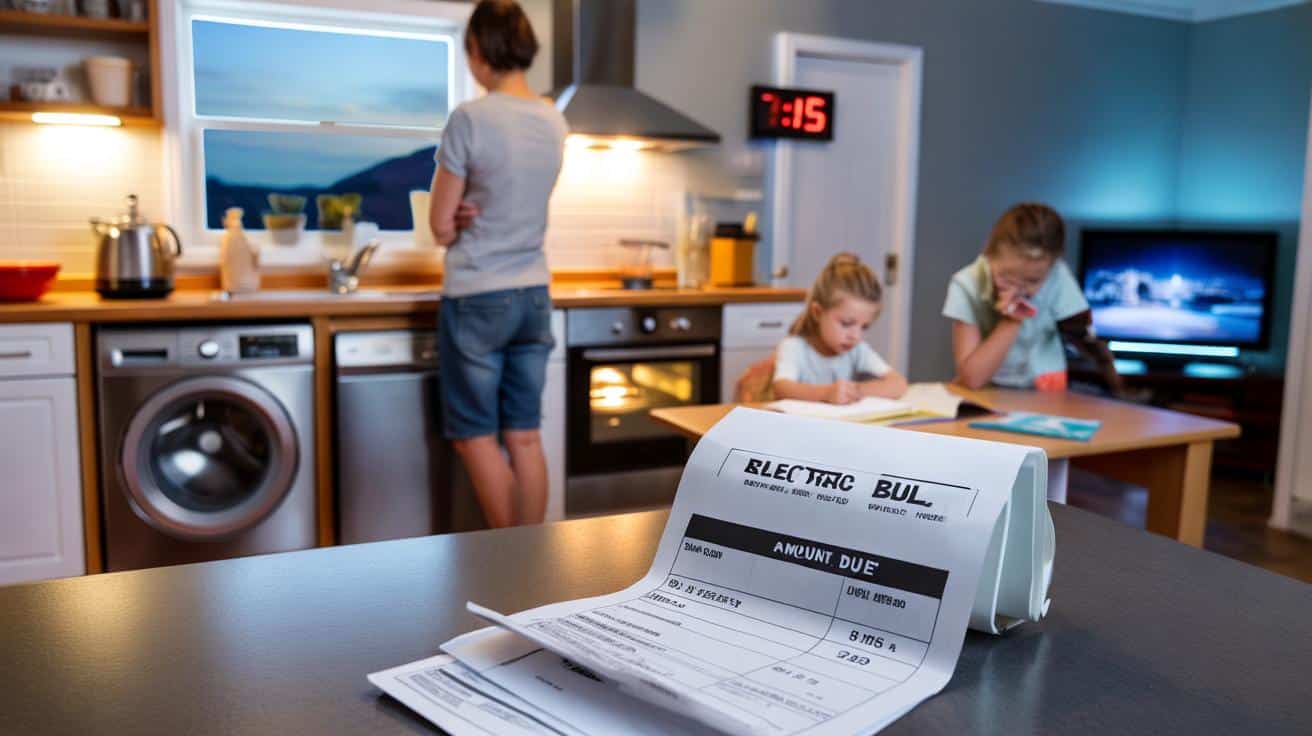
The washing machine hummed in the background while the kettle boiled and the dishwasher blinked “Start” in a sleepy suburban kitchen. It was 7:15 p.m., kids doing homework at the table, someone scrolling Instagram on the sofa, TV on low in the next room. Classic end-of-day chaos.
On the counter, a crumpled electricity bill lay open, with a red “amount due” that felt a little higher than last month. No one around that table had done anything wildly different. Same house, same habits, same appliances.
What quietly changed was the time of day they used them.
And that’s the part almost nobody talks about.
Why your 7 p.m. laundry is quietly draining your bank account
Most households think of appliances in terms of “on” or “off”, not “when”. You press the button when you’re free, when the basket is full, when you remember. The clock is almost an afterthought.
Energy companies don’t think that way at all. They slice the day into price bands, with peak hours where every spin, heat cycle or defrost costs more than the same action at dawn.
So you can have the same washing machine, the same clothes, the same cycles, and still pay very different amounts over a year. Just because you press start at the wrong moment.
Take a family on a classic peak-hour routine. They get home around 6 p.m., throw clothes in the machine, preheat the oven, run the dishwasher after dinner, and maybe plug in the tumble dryer because “it won’t dry by morning otherwise”.
On a time-of-use tariff, those two or three busy evening hours can be the most expensive slice of the whole day. An energy regulator in the UK recently estimated that shifting heavy-use appliances out of peak times can trim around 10–20% off an annual bill. For many households, that’s not small change. That’s groceries, kids’ shoes, a tank of fuel.
Yet most people have never even checked when their electricity is cheapest.
➡️ Psychology: What Your Hands Behind Your Back Secretly Reveal About You
➡️ Psychologists note that people who walk the same route daily process uncertainty differently
➡️ If you feel unsettled after positive news, psychology explains the anticipation response
➡️ Workers in this field benefit from skills that companies struggle to replace
The logic behind it is brutally simple. When everyone cooks, washes, charges and blasts heating at the same time, the grid is under pressure and costs go up. Energy providers nudge us with cheaper “off-peak” windows so they can spread demand.
We keep living in the old mental model of a flat-rate day where every kilowatt-hour is the same. It’s not. Evening electricity is often loaded with hidden surcharges, while early-morning or late-night power is sold at a significant discount.
So the real leak in your household budget might not be the technology itself. It might be the schedule you’ve fallen into without thinking.
How to “time-shift” your appliances without turning your life upside down
The smartest money-saving move you can make starts with a very low-tech step: grab a recent bill and look for the words “peak”, “off-peak”, “time-of-use” or a table with different prices by hour. If you don’t see that, log into your energy account or ring customer service and ask when electricity is cheapest and most expensive.
Once you know your cheap windows, pick just one or two heavy hitters to move. Think washing machine and dishwasher first. These often have delay-start buttons that nobody bothers with.
Set them to run just before you wake up, or late at night if your building allows it. Same chores, same appliances, suddenly on a discount.
A lot of people feel a quiet resistance here. Changing routines is annoying, especially when you’re already tired and juggling everything. The idea of calculating kilowatt-hours at 10 p.m. is not anyone’s dream.
Start smaller. Decide that from now on, you won’t run the dryer or washing machine between, say, 6 p.m. and 9 p.m. That’s it. One rule. You’ll forget some days, you’ll cheat on others when the school uniform is wet. Let’s be honest: nobody really does this every single day.
But a few small shifts each week, over months, can soften the blow of that bill in a way you actually feel.
*The trick is to design tiny habits that don’t rely on heroic willpower.*
“Once we saw our hourly price chart, we realised our ‘normal’ schedule was basically a highlight reel of the most expensive hours,” says Léa, a 34-year-old nurse who lives with her partner and toddler in a city apartment. “We didn’t buy anything new. We just stopped running everything at 7 p.m. and pushed most of it to early morning. Our bill dropped by about 18% over the winter quarter.”
- Check your tariff: one evening with your bill can reveal **cheaper hours you’re not using** at all.
- Use timers and delay starts so the machine does the thinking, not you.
- Avoid stacking big appliances together in peak time: oven + dryer + washing machine is a silent budget bomb.
- If you work from home, slide laundry and dish cycles into mid-morning or early afternoon.
- Talk with housemates or family so everyone knows the “red zone” hours to avoid.
The quiet power of rethinking your daily rhythm
Once you notice how time shapes your bill, ordinary domestic scenes start to look different. That loud row of machines at 8 p.m. feels less like “getting ahead of tomorrow” and more like paying a little extra tax on your chaos.
You don’t have to turn into a spreadsheet person to change this. Adjusting a few appliance schedules is less about obsession and more about awareness. A quick peek at your provider’s app, a sticky note near the washer, a Sunday moment to plan which days you’ll run big cycles off-peak.
There’s a quiet satisfaction in hearing the washing machine finish as you wake up, knowing it ran while electricity was cheap and the house was calm.
And then there’s the bigger picture. When you shift usage away from those crowded hours, you’re not just cutting your own costs. You’re slightly easing demand on a grid that struggles most during winter evenings and scorching summer nights.
For many people this is the first time energy stops feeling abstract and starts feeling like a dial they can actually turn. A form of control in a world where plenty of bills are non-negotiable. You can’t haggle rent with your washing machine, but you can choose when it works for you, not against you.
Some families turn it into a game, comparing bills quarter to quarter, seeing who can “win” by moving the most tasks into off-peak.
If you’ve read this far, you might already be mentally scanning your own evenings. The oven that always goes on at seven. The dryer, roaring away right after dinner. The dishwasher that hums just as you collapse on the couch.
None of those habits are wrong in themselves. They’re just slightly misaligned with the invisible pricing grid wrapped around your home. And that misalignment costs real money over a year.
The plain truth is: a lot of households are doing everything “right” with energy-efficient appliances and still overpaying, simply because they’re living on the wrong schedule.
Once you see that, it’s hard to unsee.
| Key point | Detail | Value for the reader |
|---|---|---|
| Know your peak and off-peak hours | Check your bill, app, or call your provider to identify the cheapest and most expensive time slots | Gives you a clear map to act on, instead of guessing and hoping the bill drops |
| Shift heavy appliances out of peak time | Use delay-start features and simple rules (no laundry/dryer in the evening window) | Can save around 10–20% per year with no new equipment or major lifestyle change |
| Change habits slowly, not perfectly | Start with one or two appliances and accept that some days will be off-plan | Makes the change realistic and sustainable for busy, real-world households |
FAQ:
- Question 1Can I really save money just by changing the time I use appliances?
- Answer 1Yes, especially if you’re on a time-of-use or dynamic tariff. High-consumption devices like washing machines, dryers, dishwashers and electric heaters can cost noticeably more during peak hours than at night or early morning.
- Question 2What are typical peak hours for electricity?
- Answer 2They vary by country and provider, but they often fall in the early evening, around 5 p.m. to 9 p.m., when people get home, cook, and run appliances. Check your own contract or app, as exact times and prices differ.
- Question 3Is it safe to run appliances at night while I sleep?
- Answer 3Safety recommendations differ, and some people prefer to be awake while major appliances are running. If you do use overnight cycles, keep machines well maintained, avoid overloading, and follow manufacturer guidelines and local safety advice.
- Question 4Do I need a smart meter to benefit from off-peak hours?
- Answer 4Not always. Some plans use dual-rate meters or fixed off-peak schedules. That said, a smart meter can give you much clearer real-time information about your hourly consumption and costs.
- Question 5Which appliances should I focus on first to cut my bill?
- Answer 5Start with the power-hungry ones you use often: washing machine, dryer, dishwasher, electric water heater, and, if relevant, EV charger. Moving those away from peak hours usually has the biggest impact on your bill.